
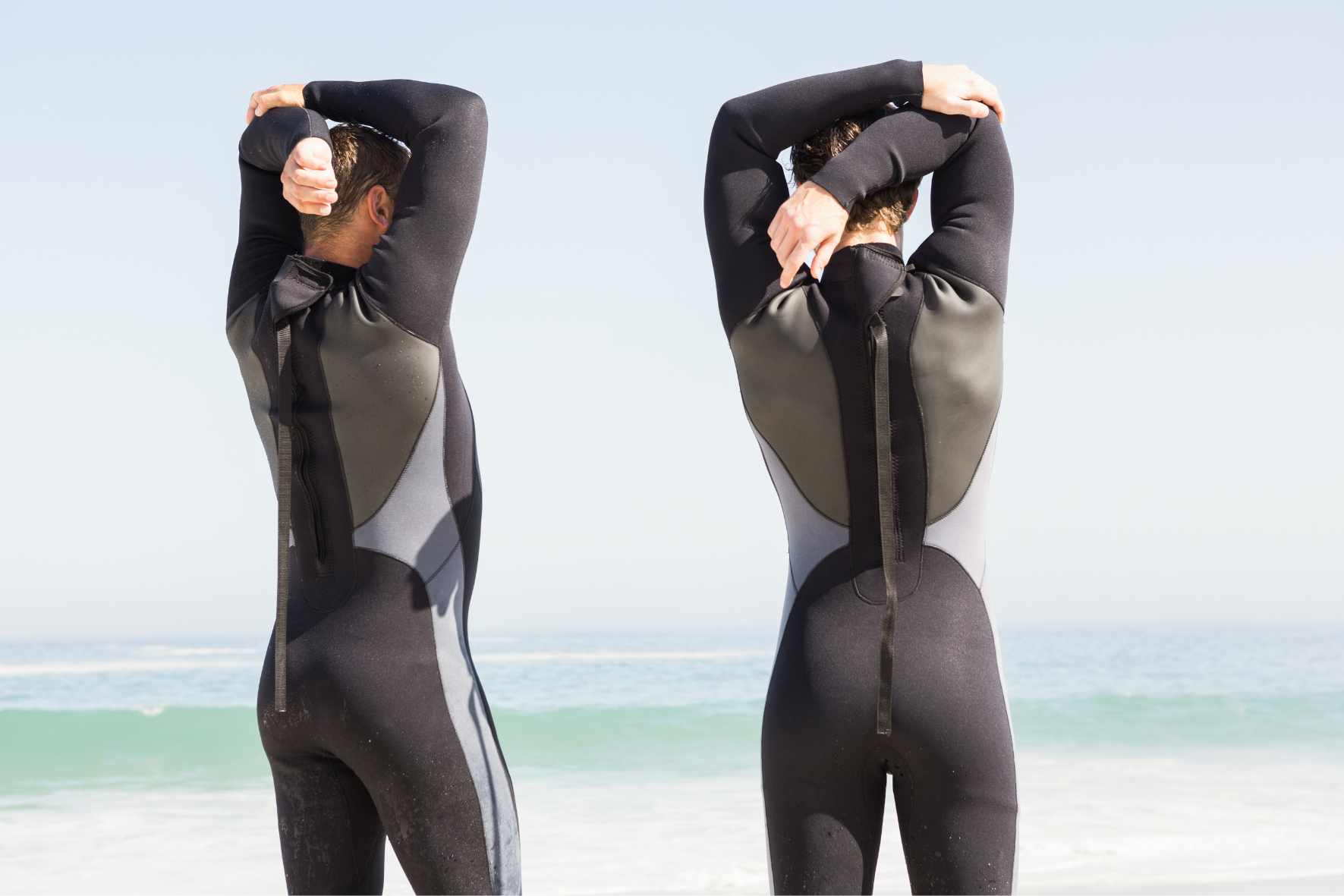
The sun is shining and the water is calling you...
Ready to experience the excitement of spring and kick off your SUP season?
WAIT ONE MINUTE!
Before diving in headfirst, there are a few essential steps to follow to ensure a safe first outing on your board. Discover how to choose the right wetsuit and prepare to fully enjoy your first adventure of the year! 
Spring: magnificent, but treacherous
Even though the air is warming up, the water remains icy cold. In spring, lakes and rivers can hover around 5°C... which is dangerously cold.
Sudden immersion in cold water can cause:
-
Hydrocution (thermal shock),
-
Loss of muscle control,
-
Rapid hypothermia.
Result : In a matter of seconds, your body can be in great danger, even if you are in excellent physical shape and know how to swim.
The appropriate equipment
When it comes to spring SUP, forget the idea of shorts and a t-shirt! While the air may be pleasant and the sun may be shining, it's important to remember that it's the water temperature that truly determines your gear choice, not the air temperature. Spring water generally remains quite cold, even when the air is mild, and dressing accordingly is essential for your safety and comfort during your outing.
WETSUIT vs DRYSUIT: What is the difference?
-
Wetsuit (neoprene suit) : A wetsuit is made of neoprene, a material that insulates thanks to a thin layer of water trapped between the skin and the suit. This layer of water warms up upon contact with your body, thus providing thermal protection. However, a wetsuit doesn't keep you completely dry. If you fall into the water, you might not be able to continue your outing comfortably, as getting wet can quickly become unpleasant.
-
Drysuit (dry suit) : Unlike a wetsuit, a drysuit keeps you completely dry . It's designed to prevent water from penetrating, and you can wear warm, insulating clothing underneath to retain your body heat. If you fall into the water, you'll stay dry and therefore warm. This allows you to continue your outing safely, without getting chilled by the water. The drysuit is therefore ideal for colder conditions or longer outings, as it offers maximum thermal protection, even if you fall into the water.
The different thicknesses of wetsuit
When choosing a wetsuit, it is essential to consider the thickness of the suit according to the water temperature to guarantee your safety and comfort during your SUP outing.
Wetsuits come in various thicknesses , each offering a level of thermal protection suited to different conditions, to retain your body heat. The greater the thickness, the more protection against the cold. There are also higher-quality neoprene suits, often more flexible , offering greater freedom of movement, making them ideal for stand-up paddleboarding (SUP). These models are generally more expensive.
5/4 mm or more: Protection for cold conditions
For temperatures of For water temperatures below 10°C , a 5/4 mm wetsuit or thicker is ideal. It offers good thermal protection in cold conditions. It's also recommended to wear a neoprene hood, 5 mm or thicker booties, and neoprene gloves. Personally, I prefer 3 mm gloves because they're more flexible and allow me to retain heat better, unlike my 7 mm gloves, which are stiffer.
3/2 mm: Option for late spring
Suitable for water temperatures around 15-18°C. This wetsuit offers adequate thermal insulation while ensuring great flexibility. A 3/2 mm wetsuit is slightly thicker in the torso (3 mm) to protect the core, the part of the body most sensitive to the cold, and thinner in the legs (2 mm) to promote mobility. The core houses vital organs, and keeping it warm protects your body's thermoregulation. This model is recommended for late spring, when the water is still cool, but not icy.
1.5 mm: The ideal option for summer
For warmer water temperatures above 18°C , a 1.5mm wetsuit offers lightweight protection while allowing for a wide range of movement. It's the perfect solution for summer, when the water is pleasantly warm, but a little protection against wind, splashes, and seaweed is still welcome. For those who are a bit more sensitive to the cold during cool evenings or rainy days, a 1.5mm long-sleeved wetsuit is ideal for retaining body heat. Personally, during my outdoor classes in the rain, I find that a wetsuit like this keeps me comfortable for several hours, even when the temperature drops a bit.
Which wetsuit should I choose for spring?
For spring, choosing the right wetsuit depends directly on the water temperature. How do you know the water temperature? A simple pool thermometer can be a great way to get an accurate reading before you head out. This will help you choose the perfect wetsuit to ensure a comfortable and safe time on the water.
If the water is still quite cool, around 10°C, a 5/4 mm wetsuit will be the most suitable for optimal thermal protection. However, if the water is a bit warmer, a 3/2 mm wetsuit will offer good insulation while allowing greater freedom of movement.
How to prevent hydrocution?
Hydrocution, or thermal shock, is a dangerous phenomenon that can lead to:
-
A blockage of breathing,
-
Muscle cramps,
-
Discomfort, or even loss of consciousness.
The danger becomes real as soon as there is more than a 10°C difference between the air temperature and the water temperature.
Here's how to prevent hypothermia while paddleboarding:
-
Know the water temperature before going in the water. Use a pool thermometer (simple and inexpensive) to prepare properly. This will help you wear the right gear so you're ready to face the water conditions safely.
-
Test your equipment in areas close to shore to ensure it's a good fit and that you feel comfortable. Before heading out on the water, also check that your gear is working properly. In the comfort of your own home, take the time to test your pump, check for any leaks, and make sure everything is in order.
-
Stay close to the edge during your first few outings, especially if you are a novice or if the water is cold.
-
Respect your physical limits . If you feel unwell, don't hesitate to take a break. It's better to be safe than sorry.

There you go, now you have all the information you need to choose THE right wetsuit for your spring paddleboarding trips!
 MARIE-EVE RICARD
Facebook
Instagram
YouTube Podcast
Website